The one idea
Pay for kilometres run safely and on time.
Two pilots in 2027
One city corridor and one provincial cluster, run on per-kilometre contracts with salaried crews.
One fare account
All fares on pilot buses go into a ring-fenced trust account, not into a conductor’s pocket.
A fixed end date
Individual route permits convert to company shares by 31 December 2029.
Start here
Six bus crashes a day. We built that ourselves
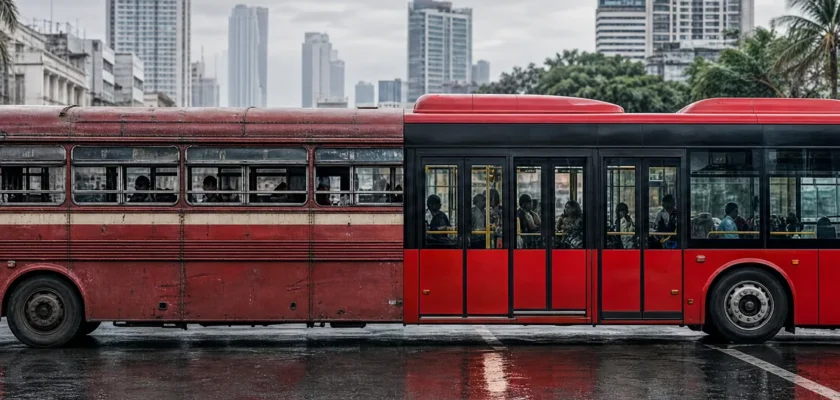
Stand at any town bus stop. Two buses arrive together, horns on, fighting for the same passengers. Then nothing comes for twenty minutes.
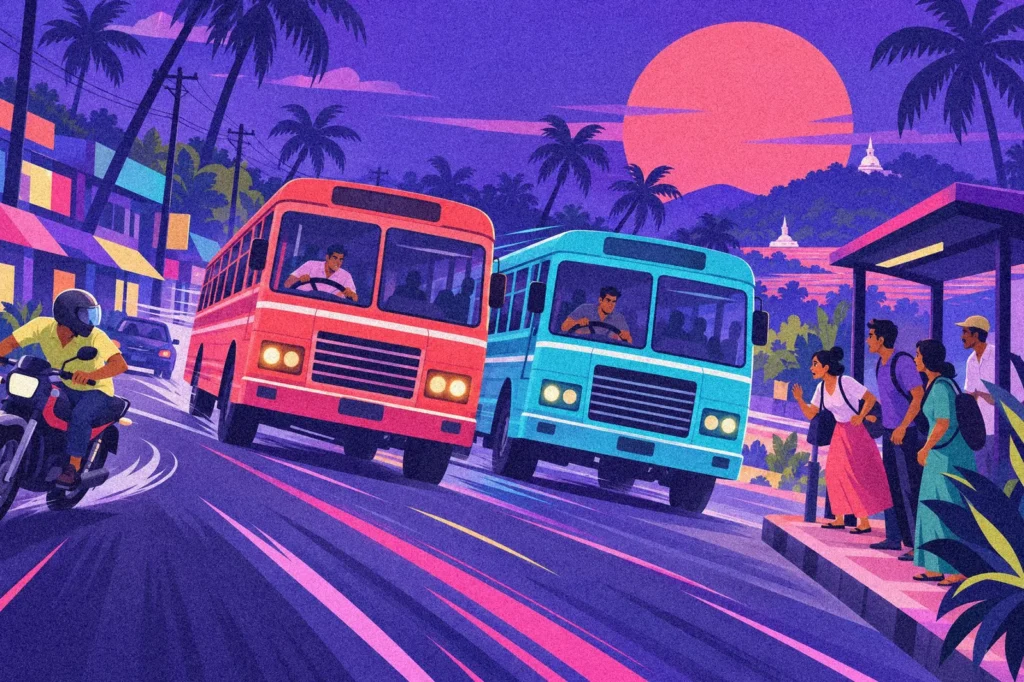
That is not bad luck and it is not bad people. It is the pay system. A private bus crew earns from the cash it collects, so every other bus on the road is a rival.S10 S11
In 2024 the police recorded 2,140 accidents involving public transport buses. That is close to six a day.S01 The top complaint to the regulator was speeding and racing.S01
Seoul, Jakarta, Dakar and Singapore all had some form of this problem. They fixed it the same way. They stopped paying buses per passenger and started paying them per kilometre, on time, with a clean safety record.
The Government has already started. Metro Bus, bank cards on buses and a joint timetable are real.S03 S15 This proposal is about the other 19,000 buses.
The one idea
Pay for kilometres run safely and on time. Not for passengers grabbed. Everything else in this document follows from that.
Decision requested
Three things we ask the Ministry of Transport to approve
1. Two pilots in 2027. One city corridor and one provincial cluster, run on per-kilometre contracts with salaried crews.
2. One fare account. All fares on pilot buses go into a ring-fenced trust account, not into a conductor’s pocket.
3. A fixed end date. Individual route permits convert to company shares by 31 December 2029.
We do not have a bus problem. We have a contract problem. Change the contract and the driving changes.
What changed since Version 1.0
The first plan had the right direction and some numbers I could not stand behind. This version keeps the direction and fixes the numbers.
| Item | Version 1.0 said | Version 2.0 says |
|---|---|---|
| Fleet size | 18,000 private and 6,000 CTB buses | 20,062 private buses hold permits and 14,790 ran in 2024. SLTB has 7,135 and ran 4,581 a day.S01 |
| Lorry chassis | 85% of the fleet, from a 2023 CTB report | I could not find that report. The motor traffic chief and a transport minister have both said “most” buses are on lorry chassis.S06 S07 |
| Selling route rights | Could raise Rs 250 billion | Removed. Selling routes is how we got here. Routes should be contracted, not sold. |
| New buses | 20,000 buses for US$2.5 billion | About 11,000 buses. About US$1.2 billion all in, mostly financed by operators against contracts. |
| Old buses | Export them to Africa | Removed. A bus that is unsafe here is unsafe there. Pay the owner, reuse sound engines and chassis for military and state cargo work, scrap the rest. |
| Electric | Full electrification in 10 years | Electric where the route suits it. First make every bus safe and every trip paid for. |
| Listed companies | 5 to 7 companies, listed on the stock exchange | Companies first, with contract income. Listing is optional and comes later. |
Four labels, so a fact is never mixed with a hope
- Verified fact. Measured or published. It carries a source number like S01.
- Evidence from abroad. What another country did and how it went.
- Proposal. What this document suggests Sri Lanka should do.
- Planning assumption. A working number. It must be replaced before money is spent.
When a source reports what somebody said, the verified fact is that they said it. It is not proof that the claim is true.
Same goal as 2024. Checked numbers, real examples, and a plan the owners can say yes to.
Part 1: The race
“There are politicians, Inland Revenue officials, Customs officials and senior police officers among bus operators.”
Transport Minister Bandula Gunawardena, June 2023. Source S07.

The system in numbers
Buses still carry more Sri Lankans than anything else. But a quarter of the private fleet is parked, the state fleet runs at two thirds, and passengers are leaving.
3 bn
Bus boardings a year. About 8 million a day.S01 S02
19,371
Buses actually on the road on an average day in 2024S01
5,272
Private buses with a permit that did not run. 26% of the private fleet.S01
46%
Share of travel by bus in 2024. It was 68% in 2010.S01 S03
Verified fact
| 2024 | Private | SLTB |
|---|---|---|
| Fleet | 20,062 | 7,135 |
| Running each day | 14,790 | 4,581 |
| Share of fleet running | 74% | 64% |
| Passengers | over 2.0 bn | 946 m |
| Routes | 4,078 | – |
| Accidents recorded | 1,546 | 594 |
Source: National Transport Commission statistics for 2024.S01
- Private buses run 76% of the service. The policy says 60% private and 40% state. On the road it is three to one.S01 S02
- SLTB ran only 63% of the buses its timetable needs. Yet it covered its costs in 2024, earning Rs 198 a kilometre against a cost of Rs 187.S01
- Almost nobody is buying buses. Only 146 new buses were registered in 2024, down from 685 the year before.S01 S02
- The fleet cannot renew itself. At 146 a year, replacing the private fleet would take 137 years.

Where the passengers went
Verified fact
Three-wheelers now carry about 21% of travel and rail about 4%.S01 When the bus does not come, people pay more for a tuk-tuk or buy a motorbike. Both make the roads more crowded and more dangerous.
The buses still carry the country. But the fleet is ageing out and the passengers are walking away.
Why they race
Ask why a bus driver overtakes on a blind bend. The answer is in how he is paid.
Verified fact
A World Bank toolkit study found that most private owners hold a single bus, and the largest holding was about 35.S11 Crews are paid in one of two ways. The owner pays a wage and takes the cash, or the crew pays a daily rent for the bus and keeps what is left.S10 S11
Either way, today’s income depends on today’s passengers. Crews work “well over 14 hours a day” with no written contract, no overtime and often no EPF or ETF.S10 A crew stays with one owner for three to six months on average.S11
So the bus in front is not a colleague. It is taking your rice. You race it to the next stop, or you crawl to block the bus behind.
What passengers complained about in 2024
| Complaint | Number |
|---|---|
| Speeding, reckless and competitive driving | 1,001 |
| Not charging the approved fare | 920 |
| Rudeness to passengers | 897 |
| Not issuing a ticket | 655 |
| Breaking the timetable | 432 |
6,729 complaints in all. The top four are about half of them.S01
2,838
Road deaths in 2025. Up 317 on 2024.S12
22
Killed when an SLTB bus left the road at Gerandi Ella, Kotmale, in May 2025S13
15
Killed in the Ella to Wellawaya bus crash in September 2025. Police blamed driver negligence.S13
Verified fact
Random checks found more than 150 private bus drivers and conductors who tested positive for drugs.S03
An honest note
The worst crash of 2025 was a state bus. State ownership alone does not make a bus safe. Rest hours, standards and checks do.
The crew is not the villain. A pay system that rewards racing will always produce racing.
Old machines. Older methods
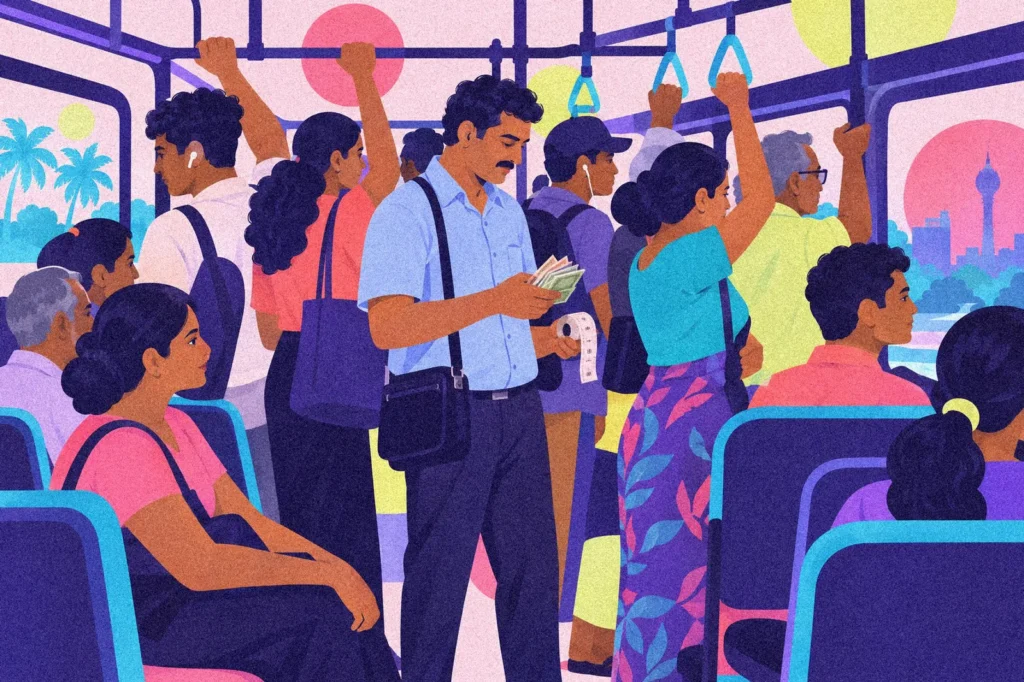
Lorries with seats
Verified fact
The head of the Department of Motor Traffic said in January 2025 that most buses here are built on lorry chassis, imported from India, and fall short on passenger comfort.S06 High steps. Hard springs. No ramp.
Cash in a fist
Verified fact
The Supreme Court ruled in 2007 that every passenger must get a printed ticket.S11 In 2024 people still filed 655 complaints about getting no ticket.S01 The transport minister calls ticket fraud the main reason the industry is not viable.S15
Paper and whistles
Verified fact
Owners still pay for a monthly paper log sheet, Rs 3,000 per bus.S02 Timetables are hard to enforce amid what a leading transport professor calls “intense on-road competition and corruption”.S17
Why owners do not buy better buses
Owners say tax adds about 40% to the price of a bus, and that leases cost about 15% a year.S02 A new lorry-chassis bus is about Rs 18 million. A proper coach is about Rs 50 million.S02 With income that changes every day, no bank lends on good terms. So the cheapest bus wins.
What nobody knows
How much money do private buses collect in a year? Nobody can say. There is no shared ticket data. A system that cannot count its income cannot plan routes, set fair fares or prove a loss. That missing number is the biggest old technology of all.
The lorry chassis, the cash and the paper log are one problem. Nobody is paid to modernise.
Who gains from the mess
Reform has been tried many times. It keeps stalling. That is not an accident. Some people earn well from the system as it is.
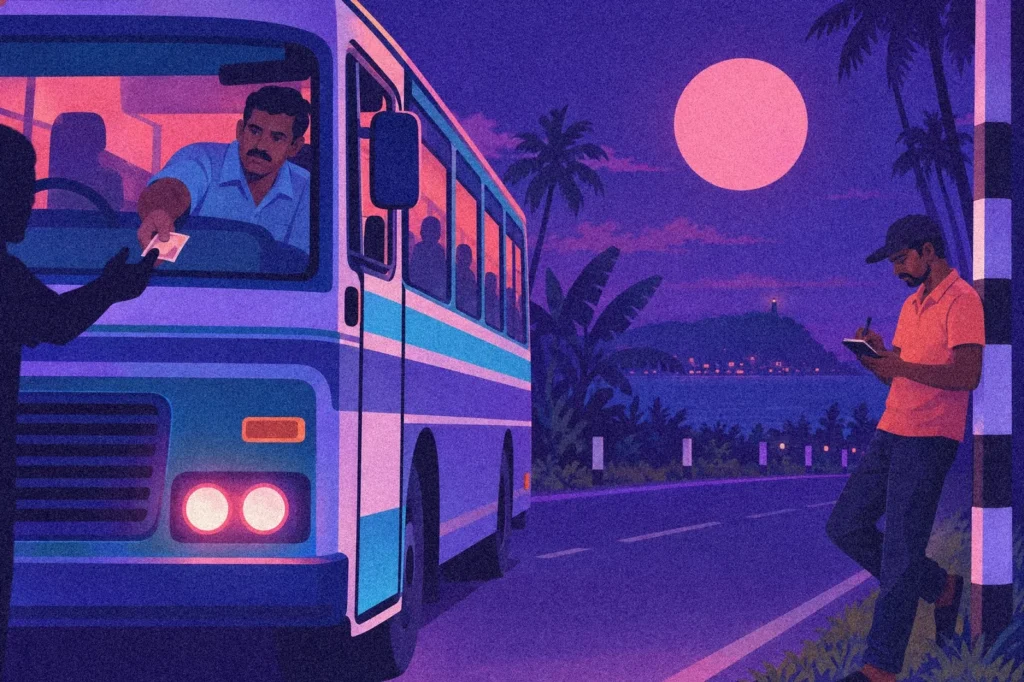
Roadside collectors
Verified fact
In November 2018 the head of the main private bus owners’ association said owners were forced to pay Rs 200 million a month to “racketeers” who line the bus routes, Rs 200 to Rs 1,000 at a time. He spoke of “a political hand at play”.S08
Powerful owners
Verified fact
In June 2023 the Transport Minister said: “There are politicians, Inland Revenue officials, Customs officials and senior police officers among bus operators.” He said this made the buses hard to regulate.S07
Permits outside the rules
Verified fact
In 2015 the ministry found route permits issued without tender and buses running with no permit at all, about 70 of them on one long-distance route.S09
The strike weapon
Verified fact
In March 2026 over 90% of private buses stayed off the road in a fare dispute.S14 In 2025 an SLTB union struck against the joint timetable, and the owners’ association warned that removing private buses was “playing with fire”.S14
Rs 2.4 bn
A year, if the 2018 extortion claim is right. The state collects about Rs 2 billion a year in bus fees.S02 S08
But be fair to owners
The small owner is squeezed too. He pays the tax, the lease and the roadside collector. Owners reported losing Rs 5,000 to Rs 20,000 a day per bus before the 2026 fare change.S14 Many would take a better deal if one existed.
Cash that nobody counts feeds everyone except the passenger. Take away the cash and the racket has nothing to collect.
What is already moving
Credit where it is due. Since 2025 the Government has moved faster on buses than at any time in many years. This proposal builds on it.
Metro Bus
Verified fact
Lanka Metro Transit was set up in October 2025. SLTB owns 60% and the Treasury the rest. By October 2026 it ran 122 low-floor, air-conditioned buses on seven routes covering about 188 km, to a timetable. About Rs 7.5 billion has gone in so far.S03 S04
Bank cards on buses
Verified fact
From 30 November 2025, buses with ticket machines can take any bank card. In January 2026 five banks launched an open payment system for buses, taking cards, wallets and QR.S15
Joint timetable
Verified fact
A single timetable for state and private long-distance buses was brought in during 2025. Even the private owners’ leader agrees it can cut accidents. He asked for a trial first.S14
More buses coming
Verified fact
50 more Metro buses are planned, taking the fleet to 172, with services to Kandy, Galle and Jaffna. 600 air-conditioned buses are approved for SLTB. China has agreed to donate 100.S04 S05
0.6%
Metro Bus as a share of all buses on the road today. 122 out of 19,371.
The gap this proposal fills
Metro Bus shows that Sri Lankans will use a good bus. But it adds new buses beside the old system. It does not change the old system. The minister has said an urban permit system and private sector involvement will come later.S04 This document is a suggestion for what “later” should look like.
We have done this at home before
Verified fact
In August 2018 the Sahasara project in Central Province pooled the revenue of 350 private buses on 48 routes on the Digana and Kadugannawa corridors, with smart card payment and live tracking. The authority reported calmer driving and more business-minded owners.S16 It was never scaled up.
Metro Bus proves the demand. Sahasara proved the method. Neither has yet reached the 19,000 buses that matter.
Part 2: The proof
The same private companies ran the same buses. Only the contract changed.
Seoul, 2004. Bus accidents fell 24% in the first year. Source S18.

Seoul had our problem in 2004
Private operators fighting over the busy routes. Empty routes ignored. Overloaded buses driven hard. Passengers leaving for cars. Sound familiar?
What Seoul changed
Evidence from abroad
- The city took over the routes. It plans and allocates them. Operators run what they are given.
- All fares go into one pool. The city shares the money out. Busy routes pay for quiet ones.
- Operators have their costs covered. Their payment rate depends on a service quality score.
- Drivers got stable wages. Before, they earned 37% less than intercity drivers.
- A 50 member civic committee of operators, experts, citizens and officials decides fares, routes and subsidies.
Source: Asian Development Bank case study.S18
-24%
Bus accidents in the first year
+30%
Average bus speed
+9.4%
Passengers
+32%
Passenger satisfaction
What it means for us
Seoul did not nationalise its buses and it did not buy them all new. The same private companies ran the same buses. Only the contract changed. The accidents fell in the first year.
The warning in it
The reform “met opposition” and needed constant talks with groups that wanted different things.S18 Seoul gave operators a seat at the table and a guaranteed income. It did not try to beat them.
Seoul then, Sri Lanka now
| Seoul before 2004 | Sri Lanka today | |
|---|---|---|
| Bus share of travel | 30.7% in 1996, 26.7% in 2002 | 68% in 2010, 46% in 2024 |
| Who picks the routes | Operators | Permit holders |
| How buses earn | Own fares, route by route | Own fares, bus by bus |
Sources: ADB for Seoul, NTC and Sunday Times for Sri Lanka.S01 S03 S18
Same owners, same buses, new contract. Accidents down 24% in a year. That is the model.
Small owners can be brought in
Sri Lanka’s hard part is not technology. It is thousands of one-bus owners. Two cities show how to bring them inside the system without ruining them.
Jakarta: contract the minibuses
Evidence from abroad
From 2018 the city bus company, Transjakarta, signed multi-year contracts with existing minibus operators. Their vans became “Mikrotrans” services that must meet set standards.
Passengers tap one card. One fare covers a van and a bus within three hours.
42% to 82%
Share of the city covered by the network, before and after
1 m
Daily passengers reached in 2020
Source: ITDP Indonesia.S20
Dakar: scrap, lease, group
Evidence from abroad
From 2005, owners of worn-out minibuses, many over 25 years old, had to join an operators’ group to get a new bus. One old bus scrapped for each new one.
A World Bank credit covered 75% of the price on a five to six year lease. Owners paid 25%. Scrap pay was about 11% of a new bus.
505
New buses delivered by 2008
17%
Of revenue once lost to unofficial payments. Eliminated.
Source: World Bank.S19
Lesson 1
Owners will join when the offer is a new bus on fair credit plus a steady income. Not when it is only a deadline.
Lesson 2
Printed tickets and fixed fares in Dakar ended the unofficial payments. No loose cash, nothing to skim.
Lesson 3
Dakar’s contracts had no service standards and nobody checked. Driver discipline slipped again.S19 Write the standards in.
Singapore lens
Since 2016 the Singapore government owns the buses and plans the routes. Four operators bid to run 14 packages of routes. Each must run at least 96% of scheduled mileage every month and keep accidents under 0.5 per 100,000 bus kilometres.S22 The operator’s job is to drive well, not to chase fares.
Jakarta and Dakar did not remove the small owner. They gave him a contract, a group and a better bus.
Where it went wrong
Copying success is easy. The useful lessons are in the failures. Here are four, and the rule each one gives us.
| City | What happened | Rule for Sri Lanka |
|---|---|---|
| Manila from 2017 | Jeepney owners were told to form cooperatives and buy new vehicles by a deadline. By the count of the transport department, only about 40% of consolidation applications were approved. A drivers’ group staged close to ten national strikes between 2017 and 2024.S23 | Money before deadlines. Never set an end date without finance and a guaranteed income behind it. |
| Bogota phase 1 | Small owners got shares in the new bus companies, with no limit on resale. Cooperatives sold out within two years and one outside investor bought almost a whole company. Too few old buses were scrapped, so they moved to nearby roads.S21 | Lock the shares. No resale for five years. Scrap the old bus, do not move it. |
| Johannesburg | Taxi owners became shareholders in the new bus company, one share per taxi withdrawn. But owners who opted out kept driving the same corridor and took the passengers.S21 S24 | One corridor, one system. When a route converts, every vehicle on it converts. |
| Lagos | A bus company formed by informal operators could not run a timetable once the fleet grew from 100 to 260. The transport authority had to bring in professional managers.S21 | Owners own. Managers manage. Boards hire transport professionals. |
The common thread
Evidence from abroad
In every case the plan was right and the deal was weak. Owners were asked to give up something certain, a permit and daily cash, for something uncertain. People fight that. Thugs and politicians only succeed in blocking reform when ordinary owners are afraid of it too.
So the test for this plan is simple
Proposal
Would a man who owns one bus, has a lease to pay and a family to feed, sign it? If his honest answer is no, the plan will fail on the road, whatever the law says. Part 3 is written to pass that test.
Reform fails when owners are given a deadline instead of a deal. Fix the deal first.
Part 3: The deal
Pay the bus to arrive, not to win.
The owner keeps a stake. The crew gets a salary. The passenger gets a timetable.
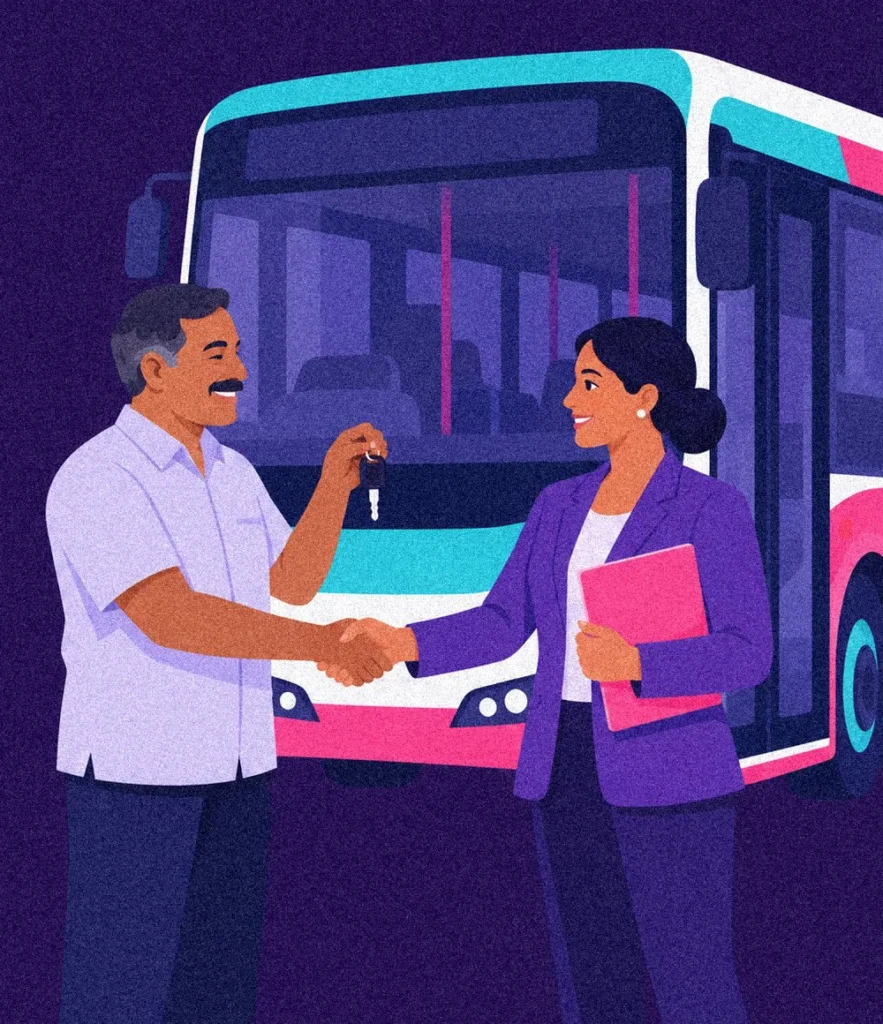
One rule: pay per kilometre, not per passenger
The passenger pays the system. The system pays the operator. The operator pays the crew a salary. Nobody on the bus gains from racing.

The payment
Proposal
A fixed rate per kilometre actually run. Plus or minus up to 10% for being on time, safe, clean and complaint-free.
The starting price
Verified fact
SLTB’s own cost in 2024 was Rs 187 per kilometre. Metro Bus reports about Rs 58,000 per bus per day.S01 S03 Those two numbers agree.
The first contracts
Planning assumption
About Rs 190 per kilometre, in a band from Rs 171 to Rs 209 by quality score. To be set by open tender in the pilots.
What one bus would earn
Planning assumption
A bus runs about 304 km a day, the SLTB average.S01 At Rs 190 that is about Rs 57,800 a day, or Rs 1.73 million a month, full or empty.
With a top quality score it is about Rs 63,500 a day. With a poor one, about Rs 52,000.
What changes on the road
- No reason to race the bus in front.
- No reason to wait at a stop until the bus fills.
- The 9 pm trip and the village trip get run, because they are paid the same as the 8 am trip.
- A breakdown costs the company money, so buses get maintained.
When the bus earns the same full or empty, the only way to earn more is to run on time and stay safe.
Three tiers. One ticket
A city bus, a village bus and an overnight coach are three different businesses. Each needs its own kind of contract, on one shared payment system.
Tier 1: City networks
Colombo first, then Kandy, Galle, Jaffna and Kurunegala.
Who plans: Lanka Metro Transit becomes the network manager, not only a bus operator.
Who runs: Metro Bus and private companies, on per-kilometre contracts by route package.
Bus: low floor, air-conditioned, ramp.
Tier 2: Provincial networks
Town to town and town to village, in all nine provinces.
Who plans: the provincial passenger transport authority, to one national rulebook.
Who runs: cluster companies formed by today’s owners, and SLTB depots, on the same contract.
Bus: purpose-built bus chassis. No new lorry chassis.
Tier 3: Long distance
Inter-provincial and expressway services.
Who plans: the National Transport Commission sets the timetable and safety rules.
Who runs: licensed coach operators who win route packages by tender. They keep the fares and carry the risk.
Bus: proper coaches, two drivers on long runs.
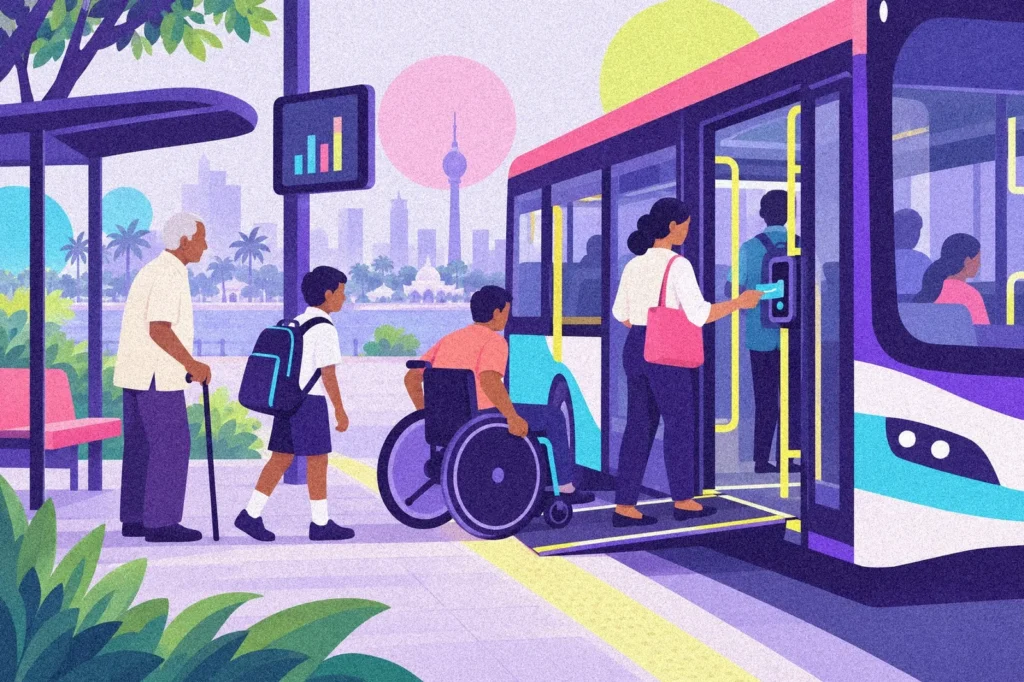
Why Tier 3 is different
Proposal
On a long-distance coach the passenger picks the operator and books a seat. Competition on comfort is healthy, so operators keep the fare. What must end is the race for roadside passengers, which the joint timetable already aims at.S14
What SLTB becomes
Proposal
SLTB stays the backbone, as the minister has said.S05 Its depots run contracts like everyone else, and it keeps the rural and night services no company wants, paid openly per kilometre.
Cities and provinces: pay per kilometre. Long distance: licensed coaches on a fixed timetable. One card for all three.
The deal for owners
Today an owner holds a permit, a lease and a daily worry. The offer is to swap them for a share, a contract and a monthly income.
Proposal
- Permit becomes shares. Every valid route permit converts into shares in the cluster company for that area. One permit, one block of shares.
- The bus is valued and bought in. A roadworthy bus is leased to the company. An unsafe one is scrapped and the owner is paid a scrap premium.
- Income is contracted. The company is paid per kilometre from the fare trust account every month. Owners receive dividends.
- Shares are locked for five years. No early sale to outside investors. This is the Bogota lesson.S21
- Professionals run it. The board hires a general manager and an operations manager with transport experience. This is the Lagos lesson.S21
- A fair exit. An owner who wants out sells permit and bus to the company at an independent valuation.
- A fixed end date. Individual permits are not renewed after 31 December 2029.
Why a bank will now lend
Planning assumption
On a Rs 20 million bus over seven years, a lease at 15% costs about Rs 386,000 a month. At 6%, the rate owners have asked state banks for, it is about Rs 292,000.S02
That is Rs 94,000 a month saved per bus. Lenders offer the lower rate when the income is a government-backed contract paid from a trust account, as in Bogota and Mexico City.S21
Tax
Proposal
Owners say tax adds about 40% to a bus.S02 Remove duty and VAT on any bus that meets the new standard and is tied to a contract. No contract, no relief.
The owner keeps his stake, loses his daily risk, and gets cheaper credit. That is a deal, not a takeover.
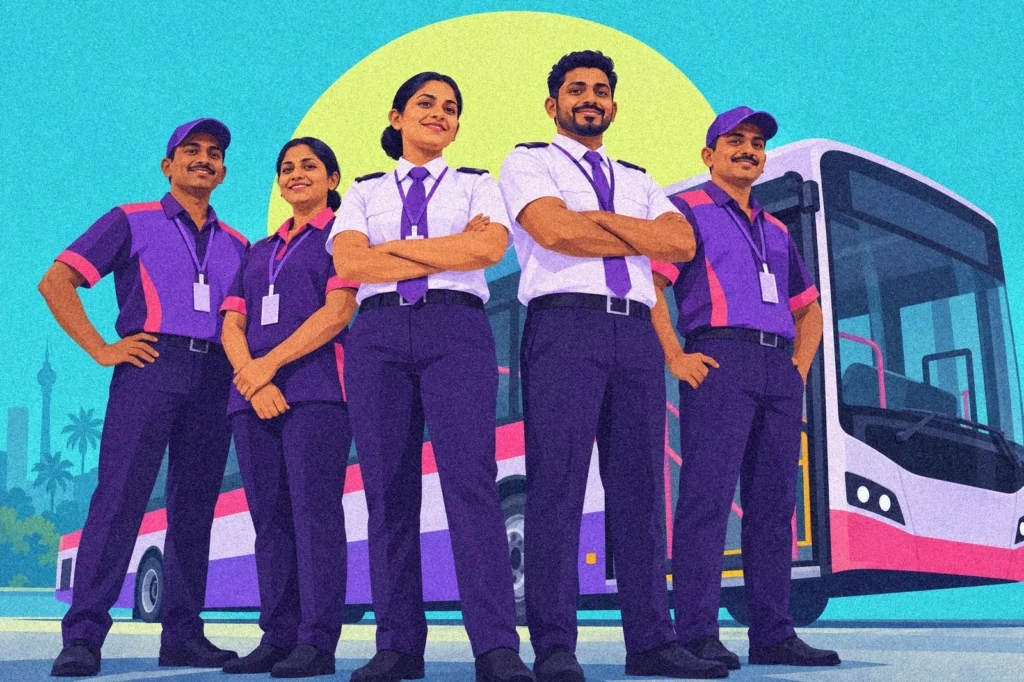
The deal for crews
| TodayS10 S11 | Under a contract |
|---|---|
| Paid from the day’s cash | Monthly salary from the company |
| No written agreement | Appointment letter and ID |
| Well over 14 hours a day | Shifts with a legal limit on driving hours |
| Often no EPF or ETF | EPF, ETF and insurance |
| Three to six months with one owner | A career with grades and training |
| Fined from own pocket | Safety bonus for a clean record |
Proposal
- Register every driver and conductor working today. Nobody is locked out for lack of paperwork.
- A two week course on safe driving, passenger care and the new ticket machines, paid as working time.
- Medical and drug tests before a licence to drive a contracted bus, and at random after.S03
- Conductors keep a job. As ticket checkers, stop marshals and customer staff while cash fades out.
- Women drivers and crew actively recruited. A salaried shift job is one many more people can take.
Seoul lens
Seoul’s drivers earned 37% less than intercity drivers before 2004. The reform gave them higher wages and stable jobs, with less pressure to overload the bus.S18 The safety gain and the wage gain were the same reform.
A rested driver on a salary has no reason to race. This is the cheapest road safety measure we have.
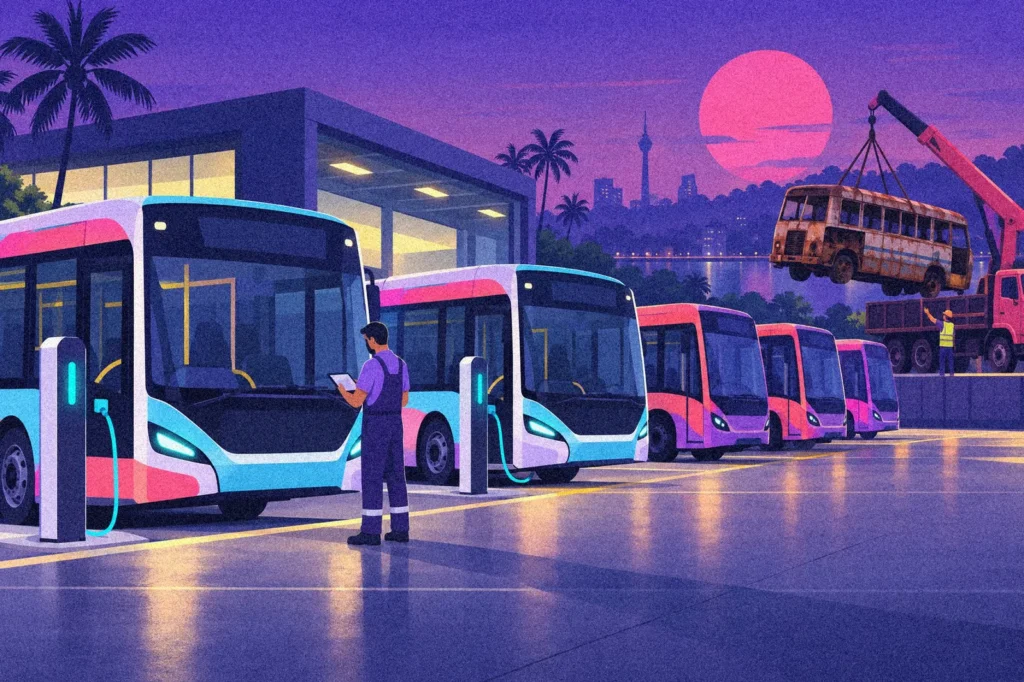
A fleet built for people
Proposal
- No new lorry-chassis buses. Stop registering them for passenger service from 1 January 2028.
- One national bus standard. Floor height, doors, seats, brakes, speed limiter, GPS and a ticket reader, by tier.
- Never back into passenger service. Each old bus retired earns its owner a scrap premium. Sound engines, gearboxes and chassis can go to the armed forces and state bodies as cargo trucks, recovery vehicles, training units or spares. The rest is cut up.
- Age limit enforced by contract. The rules already say ten years on national routes.S02 A contract can make it real.
- Electric where it fits. Flat city routes with a depot charger first. Hill and long-distance routes later.
Planning assumption
| 2027 to 2032 | Buses | Rs m each |
|---|---|---|
| City low-floor | 3,000 | 30 |
| Provincial standard | 7,000 | 20 |
| Long-distance coach | 1,000 | 50 |
| Total | 11,000 | Rs 280 bn |
City price from the Metro Bus budget of Rs 3 billion for 100 buses. Coach price from operators.S02 S04
Evidence from abroad
In December 2025 India closed a tender for 10,900 electric buses in five cities. Private operators own and run the buses. The cities pay a fixed fee per kilometre.S25 The per-kilometre contract is what makes electric buses bankable.
11,000 proper buses in six years. The other 8,000 roadworthy ones stay, fitted with GPS and a card reader.
Technology that counts
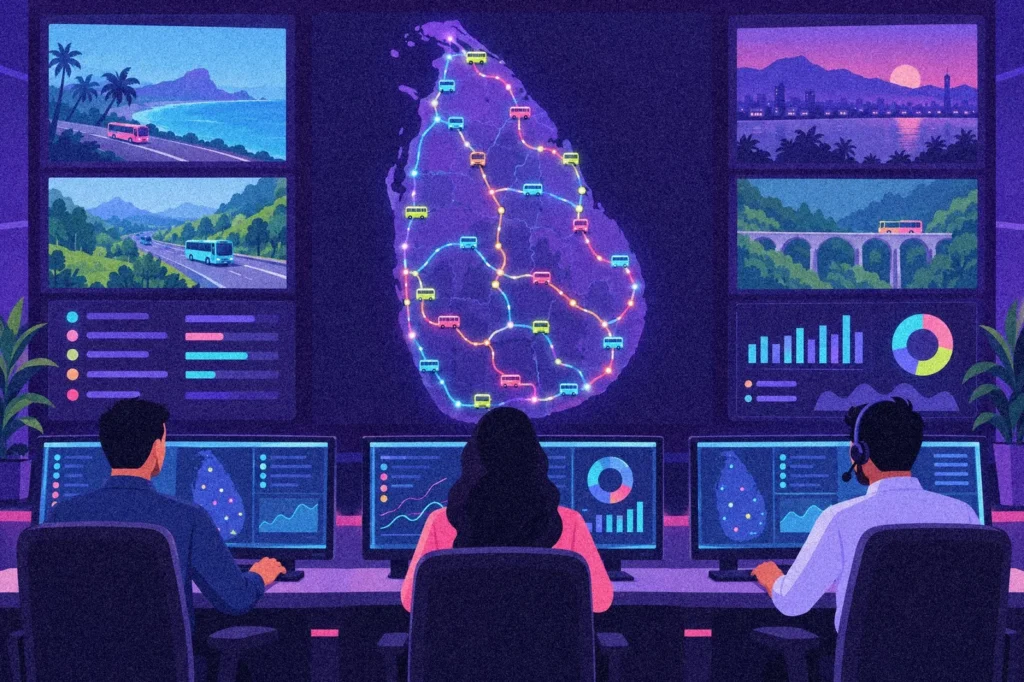
Proposal
One way to pay
Bank card, phone wallet or QR on every contracted bus, using the open system the banks launched in 2026.S15 Cash still accepted at first, but every cash fare prints a ticket and is counted.
GPS on every bus
Kilometres, speed, stops and timing are recorded automatically. This is what the monthly payment is calculated from. It replaces the roadside timekeeper and the paper log sheet.
One control room per network
Staff watch gaps and bunching and call a spare bus when one breaks down.
Open data
Live bus positions and timetables are published free, so any app can show when the next bus comes. Metro Bus has started with its own app.S04
A public scoreboard
Every month, each company’s on-time rate, accidents, complaints and payment are published. Passengers can see who is good.
Why this is the centre of the plan
You cannot pay per kilometre without knowing the kilometres. You cannot share fares without counting them. The technology is not a nice extra. It is the contract.
Singapore lens
Singapore measures every route on waiting time and on-time running, and pays operators on the result.S22 Nobody argues about the timetable, because the data is the timetable.
A bus that is tracked and cashless cannot race unseen, skim unseen or be squeezed at the roadside unseen.
Breaking the grip
The people who gain from today’s mess will not be persuaded. They have to be made irrelevant. Seven moves, each aimed at one source of their power.
1. Take the cash off the bus
Proposal
No cash, nothing to hand over at the roadside. Dakar ended unofficial payments worth 17% of revenue this way.S19
2. Publish who owns what
Proposal
A public register of every permit and every company share, with the real owner’s name. Officials and politicians who hold a stake must declare it.
3. Put it in an Act
Proposal
A circular can be reversed by the next minister. Contracting, the fare trust and the 2029 date should be law.
4. Keep buses running in a strike
Proposal
Contracts carry a step-in right. SLTB and Metro Bus keep a reserve fleet for pilot corridors. In 2025 the main terminals ran normally through a strike.S14
5. Give owners a seat
Proposal
A standing council of owners, crews, passengers, experts and officials, as in Seoul.S18 People do not burn down a table they sit at.
6. Protect the honest
Proposal
A hotline and legal protection for owners and crews who report extortion. Police action on the routes named.
7. Win the small owner first
Proposal
The loud opponents need the quiet majority of one-bus owners behind them. Once those owners hold shares and receive a monthly payment, a strike costs them their own income. The grip loosens by itself.
Do not fight the bus mafia on the road. Remove the cash, publish the owners, and pay the honest majority better.
Part 4: The start
In 90 days the Cabinet can have a priced pilot in front of it.
Two pilots in 2027. Individual permits end on 31 December 2029.
Six years. Three gates
No big bang. Two pilots first, then province by province. Each stage must pass a gate before the next is funded.
| When | What is done | Gate to pass |
|---|---|---|
| 2027 Set up and pilot | Bus Services Act drafted. Fare trust account opened. National bus standard issued. Two pilots start: one Colombo corridor under Lanka Metro Transit, and the Sahasara corridors in Central Province. | Gate 1. Pilots live. Crews on salary. Every fare counted. Owners paid on time for six months. |
| 2028 Prove it | Pilot data published monthly. No new lorry-chassis registrations from January. Cluster companies formed in Western and Central Provinces. First contracted bus orders. | Gate 2. In the pilots: accidents and complaints down, on-time running up, owners’ income no lower than before. |
| 2029 Convert | All nine provinces form cluster companies. Long-distance route packages tendered. Individual permits end on 31 December. | Gate 3. At least 90% of permits converted by choice. Exit valuations paid. |
| 2030 to 2032 Renew | About 11,000 new buses delivered. All contracted buses on GPS and card. Old buses retired as they are replaced. First electric depots in cities. | Targets. See below. |
Targets for 2032
Proposal
-50%
Bus accidents, from 2,140 a year to under 1,100
55%
Share of travel by bus, up from 46%
95%
Of scheduled kilometres actually run
100%
Of fares counted, cash or card
If a gate fails
The pilots continue and the national rollout waits. Nothing is lost, because the pilot corridors already run better than before. This is the opposite of Manila, where the deadline came first and the proof never did.S23
Pilot in 2027, prove in 2028, convert in 2029, renew by 2032. No stage starts on faith.
What it costs. Who pays
Planning assumption
| Paid by the state, 2027 to 2032 | Rs bn |
|---|---|
| Scrap premium, 11,000 old buses at Rs 1.5 m | 16.5 |
| GPS, card readers and central systems | 8.0 |
| Depots, terminals and control rooms | 40.0 |
| Crew training and transition fund | 6.0 |
| Authorities, law and pilots | 3.0 |
| Contingency, 15% | 11.0 |
| Public total | 84.5 |
| Financed by operators against contracts | Rs bn |
|---|---|
| 11,000 new buses | 280.0 |
| Contingency, 15% | 42.0 |
| Fleet total | 322.0 |
All in, about Rs 407 billion, or about US$1.2 billion at Rs 332.7 to the dollar.S27 Only about a fifth of that is public money, about Rs 14 billion a year.
For scale, Rs 7.5 billion has already gone into Metro Bus for 122 buses.S04
Planning assumption
Rs 400 bn
Rough yearly cost of running today’s bus service, if every bus cost what SLTB costs per kilometre
3.5%
The public cost per year as a share of that
Can fares cover it?
Verified fact
In 2024 SLTB earned Rs 100.9 billion against costs of Rs 95.3 billion, a surplus of Rs 5.6 billion, with a third of its fleet off the road.S01 Its income includes state payments for season tickets and loss-making routes. The pilots will show the true balance.
Where the money can come from
Proposal
- Development bank credit for scrappage and depots, as in Dakar.S19
- State bank leasing at 5 to 6% for contracted buses.S02
- The fees owners already pay, about Rs 2 billion a year.S02
- Fares that are finally counted.
About Rs 14 billion a year of public money unlocks Rs 322 billion of private investment in new buses.
Risks, and the first 90 days
| Risk | What we do about it |
|---|---|
| Owners refuse and strike | Start with volunteers in two pilots. Publish what pilot owners earn. Reserve fleet on pilot corridors. |
| Payments to operators arrive late | Fare trust account is ring-fenced by law. Operators are paid before anything else. This is the risk that kills trust fastest. |
| Fares do not cover the cost | Pilots measure the real gap. Rural and night services are funded openly per kilometre, not hidden in losses. |
| Companies are badly run | Professional managers required by contract. Authority can step in or re-tender. |
| Old buses keep running beside the new | When a corridor converts, every permit on it converts. A retired bus is deregistered for passenger use before any part is reused. |
| GPS and ticket data are tampered with | Devices sealed and audited. Card data comes from the banks, not from the operator. |
| A new government drops it | Put the model in an Act. Publish results monthly so passengers defend it. |
| Crews lose income in the change | Salary set no lower than average take-home today, measured in the pilot, plus EPF and ETF. |
The first 90 days
30 days
The Ministry names a reform lead and a small team. The National Transport Commission shares route, permit and complaint data with it.
60 days
Two pilot corridors chosen. Owners on them invited to volunteer. Banks asked to price a contract-backed lease.
90 days
A Cabinet paper: pilot contract, per-kilometre rate range, fare trust account, and the 2027 budget line.
A local voice
A column in the Daily FT in January 2026 made the same case from inside Sri Lanka: separate who owns the bus from who runs the service, pay owners a monthly retainer plus a fee per kilometre, and track every bus by GPS.S28 The idea is no longer foreign.
In 90 days the Cabinet can have a priced pilot in front of it. That is all this proposal asks for today.
Why I wrote this again
I grew up in Gampola and went to school in Kandy. I lived five years in Colombo and have now spent twenty in Singapore. The bus is how I got anywhere, and I know how it feels when two of them decide to race.
Two years ago I wrote a first version of this plan and sent it to people in Sri Lanka. Nobody replied. Since then the Government has started Metro Bus, card payments and a joint timetable. I am glad. Some of it is what I hoped for.
In Singapore a bus driver is a salaried professional and nobody races. The difference is not the people. Sri Lankan drivers are as skilled as any. The difference is that here nobody is paid to race.
I am not a transport engineer. I have checked every number I could and marked every one I could not. If you work in the Ministry, the NTC, SLTB, a bus owners’ association or a union, tell me where this is wrong.
The idea is shared openly. Take it, change it, use it. No credit is needed.
The ask, one more time
Two pilots in 2027. One fare trust account. A fixed end date of 31 December 2029 for individual permits.
What success looks like
In 2023 a kanji seller in Mattakkuliya told a newspaper she now takes three buses to hospital and pays about three times what she paid when route 155 had sixty buses.S17 In 2032 she waits ten minutes, taps a card, sits down, and the driver is not in a hurry.
One sentence to remember
Pay the bus to arrive, not to win.

We already pay for a bus service. We are just paying for the wrong thing.
The working
| Figure | How it was worked out | Result |
|---|---|---|
| Buses on the road | 14,790 private + 4,581 SLTB, daily average 2024S01 | 19,371 |
| Private buses not running | 20,062 – 14,790. Share: 5,272 / 20,062 | 5,272 / 26% |
| Private share of service | 14,790 / 19,371 | 76% |
| Boardings a year | 946 m SLTB + over 2,000 m privateS01 S02 | about 3 bn |
| Boardings a day | 3,029 m / 365 | 8.3 m |
| Bus accidents a day | 2,140 / 365S01 | 5.9 |
| Years to renew fleet | 20,062 buses / 146 registrations a year | 137 years |
| SLTB cost per km | Rs 95,348 m / 509.0 m kmS01 | Rs 187 |
| SLTB income per km | Rs 100,943 m / 509.0 m km | Rs 198 |
| Cost per bus per day | Rs 187 x 304 km. Metro Bus reports Rs 58,000S03 | Rs 56,900 |
| Contract rate band | Rs 190 minus 10% and plus 10% | Rs 171 to 209 |
| One bus per day | 304 km x Rs 190. Band: x Rs 171 and x Rs 209. Month: x 30 | Rs 57,760 / 1.73 m |
| Extortion claim, yearly | Rs 200 m x 12S08 | Rs 2.4 bn |
| Metro share of buses | 122 / 19,371 | 0.6% |
| Lease at 15% and 6% | Rs 20 m, 84 monthly payments, standard loan formula | Rs 386,000 / 292,000 |
| Fleet cost | 3,000 x 30 + 7,000 x 20 + 1,000 x 50, in Rs m | Rs 280 bn |
| Public cost | (16.5 + 8.0 + 40.0 + 6.0 + 3.0) x 1.15 | Rs 84.5 bn |
| Public cost a year | 84.5 / 6 years | Rs 14.1 bn |
| All-in total | (280 + 73.5) x 1.15. In dollars at 332.7S27 | Rs 407 bn / US$1.22 bn |
| Yearly system cost | 19,371 buses x 304 km x 365 days x Rs 187 | about Rs 400 bn |
| Public share of that | 14.1 / 402.6 | 3.5% |
Limits of these numbers
NTC figures are for 2024 and its tables do not always agree with each other. The private passenger count is “over 2 billion” as reported. Unit costs for depots, systems, scrap premium and provincial buses are my assumptions. No operator, bank or ministry has reviewed this document. The Rs 200 million extortion figure is one association leader’s claim from 2018 and has not been audited. Every planning assumption should be replaced with tender prices and pilot data.
Where the facts come from
- S01: National Transport Commission, Sri Lanka. Statistics 2025 (data for 2024). Fleet, operated buses, passengers, costs, routes, complaints, accidents, registrations, modal share.
- S02: The Morning, 31 May 2026. “Taxing buses while wanting better public transport”. Fleet, taxes, lease rates, fees, bus prices, 60/40 policy.
- S03: Sunday Times, 9 August 2026. “Metro bus takes route to qualitative shift in city transport”. Lanka Metro Transit, routes, cost per bus, drug tests, modal share since 2010.
- S04: Sunday Times, 4 October 2026. “Metro expands fleet and routes to reach new milestones”. 122 buses, 188 km, Rs 7.5 bn, expansion, minister on urban permits.
- S05: News First, 7 September 2026. Metro fleet to 172, 600 air-conditioned buses for SLTB, minister on SLTB as backbone.
- S06: Daily Mirror, 14 January 2025. Commissioner General of Motor Traffic on lorry-chassis buses and new standards.
- S07: Daily Mirror, 13 June 2023. “Politicians, senior cops hindering regulation of private bus operations”. Statement by Transport Minister Bandula Gunawardena.
- S08: Daily Mirror, 21 November 2018. “LPBOA says losing Rs. 200 mn as extortion payments monthly”. Statement by association chairman Gemunu Wijeratne.
- S09: Sunday Times (Business Times), 27 September 2015. “Private bus route permit scam deprives state of massive revenue”.
- S10: Daily Mirror, 24 August 2018. “Private bus drivers: ignored but important”. Crew pay, hours and benefits.
- S11: SSATP (Africa Transport Policy Program, World Bank). Public transport toolkit, Sri Lanka case study. Ownership, crew pay models, crew tenure, 2007 Supreme Court ticket ruling.
- S12: Sunday Times, 4 January 2026. “Crash deaths rising, police advocate driver discipline”. Road deaths 2024 and 2025.
- S13: Daily Mirror, 12 May 2025 (Gerandi Ella, Kotmale crash). Ada Derana, 8 September 2025 (Ella to Wellawaya crash, police finding).
- S14: Ada Derana, 23 March 2026 (private buses withdrawn). Daily Mirror, 27 August and 14 September 2025 (joint timetable, strike warning). News First, 28 August 2025 (SLTB union strike).
- S15: Ada Derana, 8 October 2025 (bank cards on buses, minister on ticket fraud). Daily FT, 16 January 2026 (Smart Bus Ticketing System).
- S16: Central Province Passenger Transport Service Authority. Sahasara bus reform page.
- S17: Daily Mirror, 6 July 2023. “Transport experts did warn”. Prof. Amal Kumarage, and passenger accounts from route 155.
- S18: Asian Development Bank, Development Asia. “Implementing a Semi-Public Bus System to Ease Traffic Congestion” (Seoul).
- S19: World Bank. “The Dakar Bus Renewal Scheme: Before and After”.
- S20: ITDP Indonesia, 2021. Jakarta Transport Integration case study.
- S21: ITDP, BRT Planning Guide, section 16.6 “Company Formation”. Bogota, Mexico City, Johannesburg, Lagos.
- S22: Land Transport Authority, Singapore. Bus Contracting Model.
- S23: DZRH News, Philippines. “7 years of PUV modernization”. Partly an opinion piece quoting a drivers’ group. Figures to be checked against the transport department.
- S24: BusinessTech, South Africa, 8 March 2016. Rea Vaya taxi owner compensation.
- S25: Outlook Business, India, 25 December 2025. CESL tender for 10,900 electric buses on gross cost contracts.
- S26: Version 1.0. “Strategic Plan to Transform Sri Lanka’s Bus Transport System: Moving Forward”, Arasaratnam Sasikumar.
- S27: Central Bank of Sri Lanka. Indicative exchange rate, mid November 2026. Rs 332.7 to US$1.
- S28: Daily FT, 2 January 2026. “Separating ownership and operation will significantly improve public bus transportation system”.
Prepared by Arasaratnam Sasikumar. Version 2.0, November 2026. A personal proposal. Not issued by or on behalf of any ministry, authority, operator or association. Images marked “Illustrative concept image” are illustrations, not photographs of real people or events. It may be freely shared, used and improved.